Entre 22
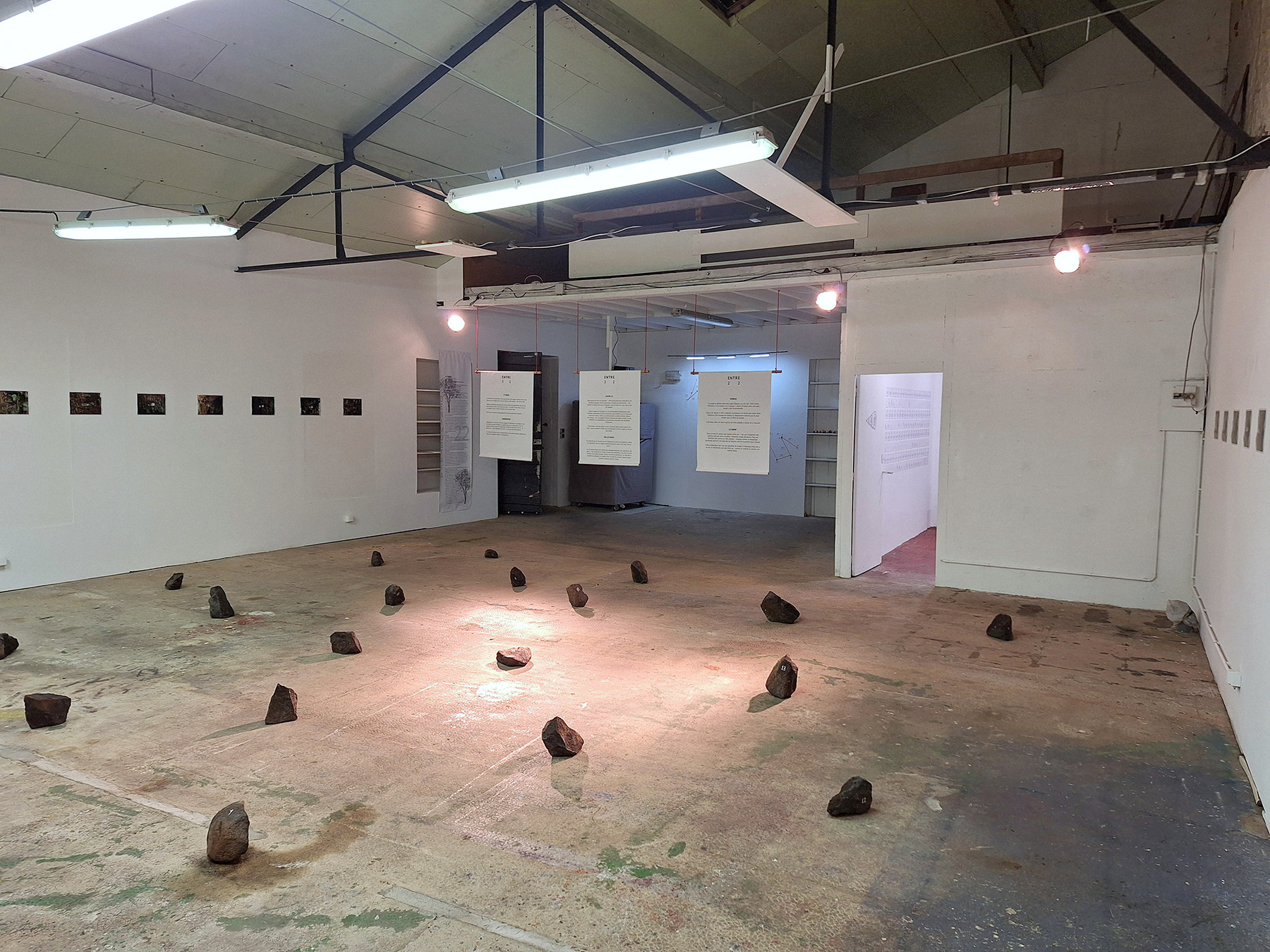
Entre 22
2025 · Utopos 22 · La Tannerie, Rhizome · Avallon
Entre 22 can be read in two ways: as a reference to the space between twenty-two points and as an invitation to enter it. The title implies movement — from a position outside to a presence within. But entering a space does not mean occupying a predetermined position in it. On the contrary, from the moment of entry, one's position becomes a question: where are you in relation to the other points, and what changes when you begin to move?
Twenty-two points are the initial constraint, accepted without the need for justification. They are neither an order discovered in nature nor a universal formula. The number is fixed, but everything else remains open: distances, directions, possible connections, ways of moving from one point to another. The work therefore emerges not so much in the points themselves as in the intervals between them. A point makes it possible to mark a position; an interval requires a relation to be established.
Yet the space between is not necessarily an emptiness separating one element from another. It is a space of possible action. It cannot be exhausted by a diagram, because a diagram records relations but does not experience them. Nor can it be exhausted by the gaze: the gaze selects a position, while movement continually changes it.
The exhibition makes this distinction tangible. The twenty-two points, previously existing as a limited set of elements within the artist's own work, become a condition encountered by another person. They are not given a ready-made sequence of thoughts or a single route to follow. They enter a space where the arrangement of things is already given, but their own path remains to be found. In this sense, Entre 22 is not a representation of a system, but an invitation to find oneself inside it.
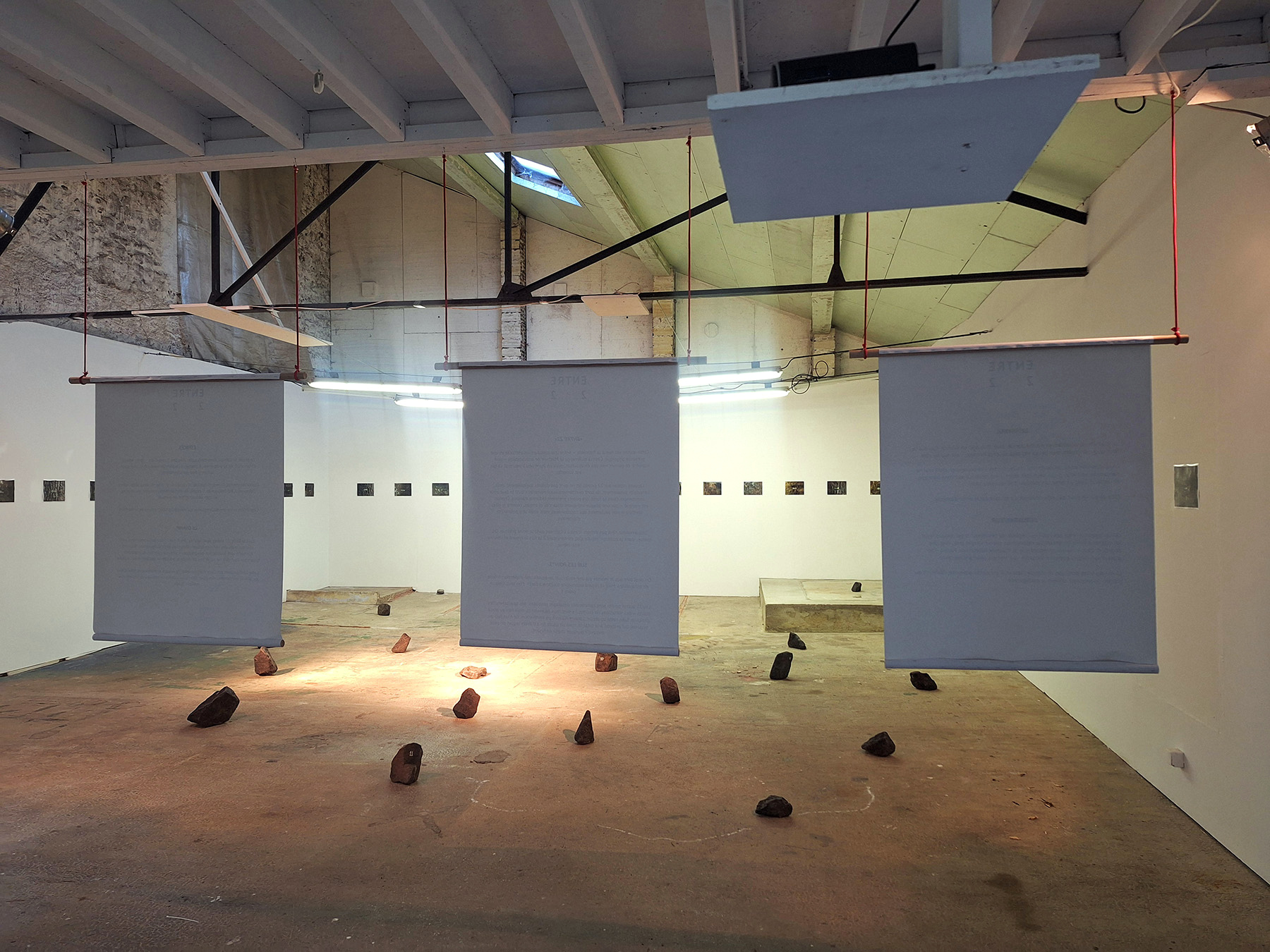
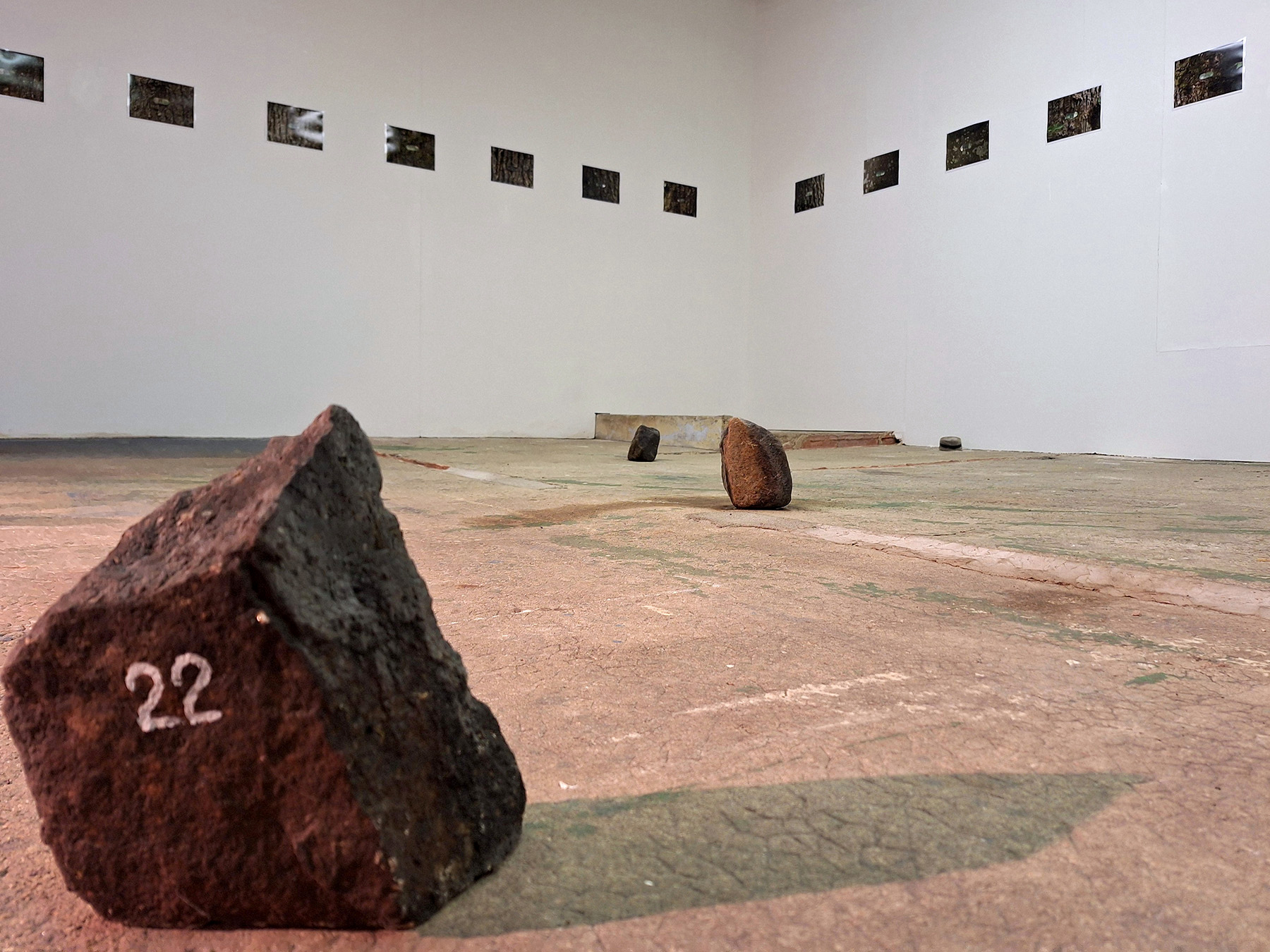
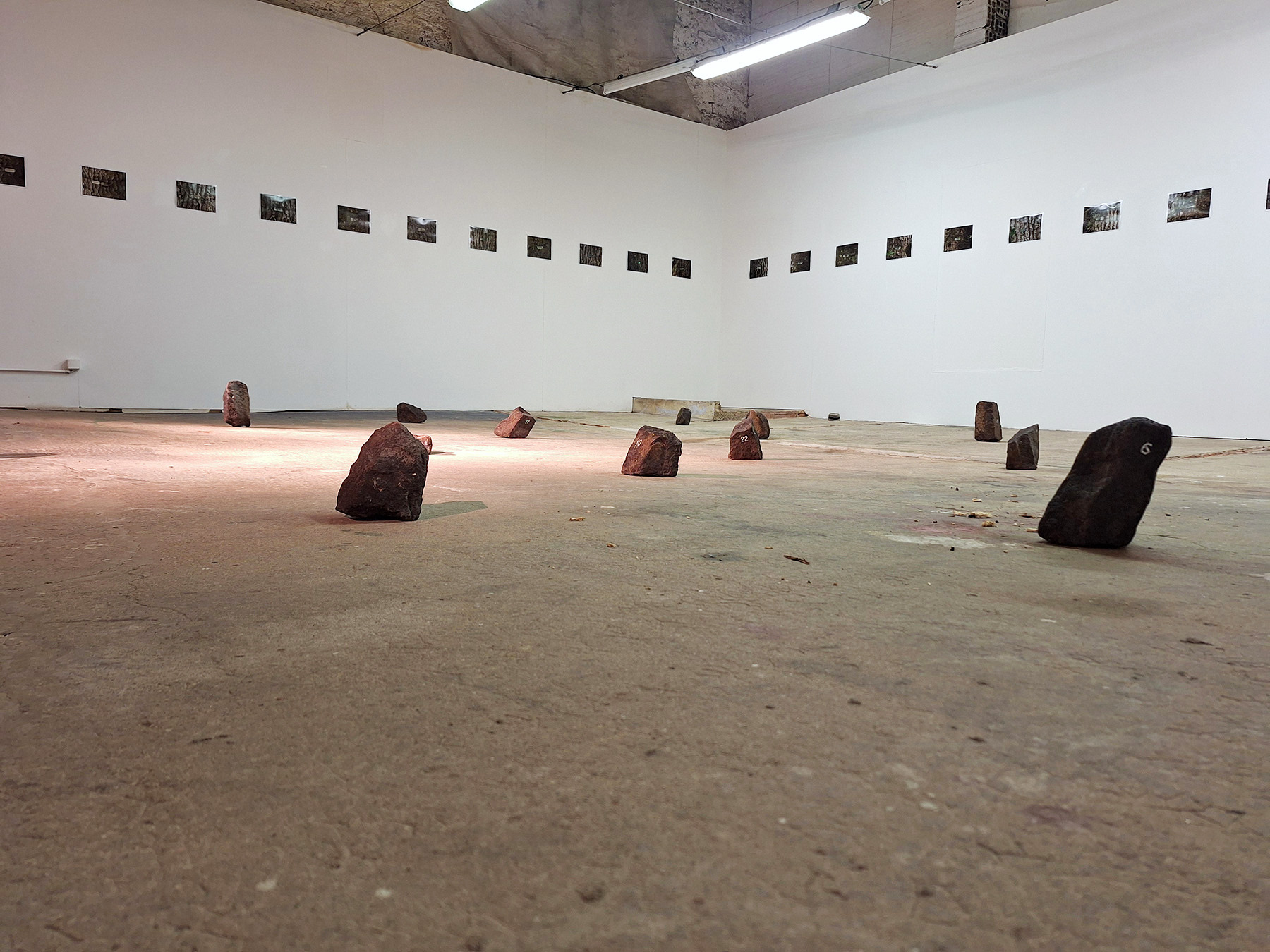
Initially, the 22 points were identified in a forest — not as a ready-made structure, but as an opportunity to reveal a particular artificial order within a space that does not conform to it. The trees already occupied their places, without any need for numbering or measurement. Selecting 22 of them changed nothing in the forest itself, but changed the way it could be read. A sequence emerged between the trees, and distances and directions that previously held no particular significance became the substance of the work.
In the transition to the exhibition space, this order is not reproduced literally. The 22 stones do not replicate the arrangement of the trees. The number remains the same, but the configuration changes, and with it the nature of the relations. In the forest, a sequence can be identified among trees whose positions are independent of that sequence. In the exhibition space, the sequence is preserved in the numbering of the stones, but it does not determine a single route. Unlike the trees and the points on the diagram, the stones are not fixed in place — their positions are not definitive.
The transfer from the forest to the exhibition space is therefore not the relocation of the same structure, but an examination of what is actually carried over. The number remains unchanged, while the material elements and spatial relations change. And if the 22 points can be arranged differently again and again, the unity of the work must be sought not in their particular configuration, but in the possibility of entering it, establishing relations, and each time finding oneself in a new position.
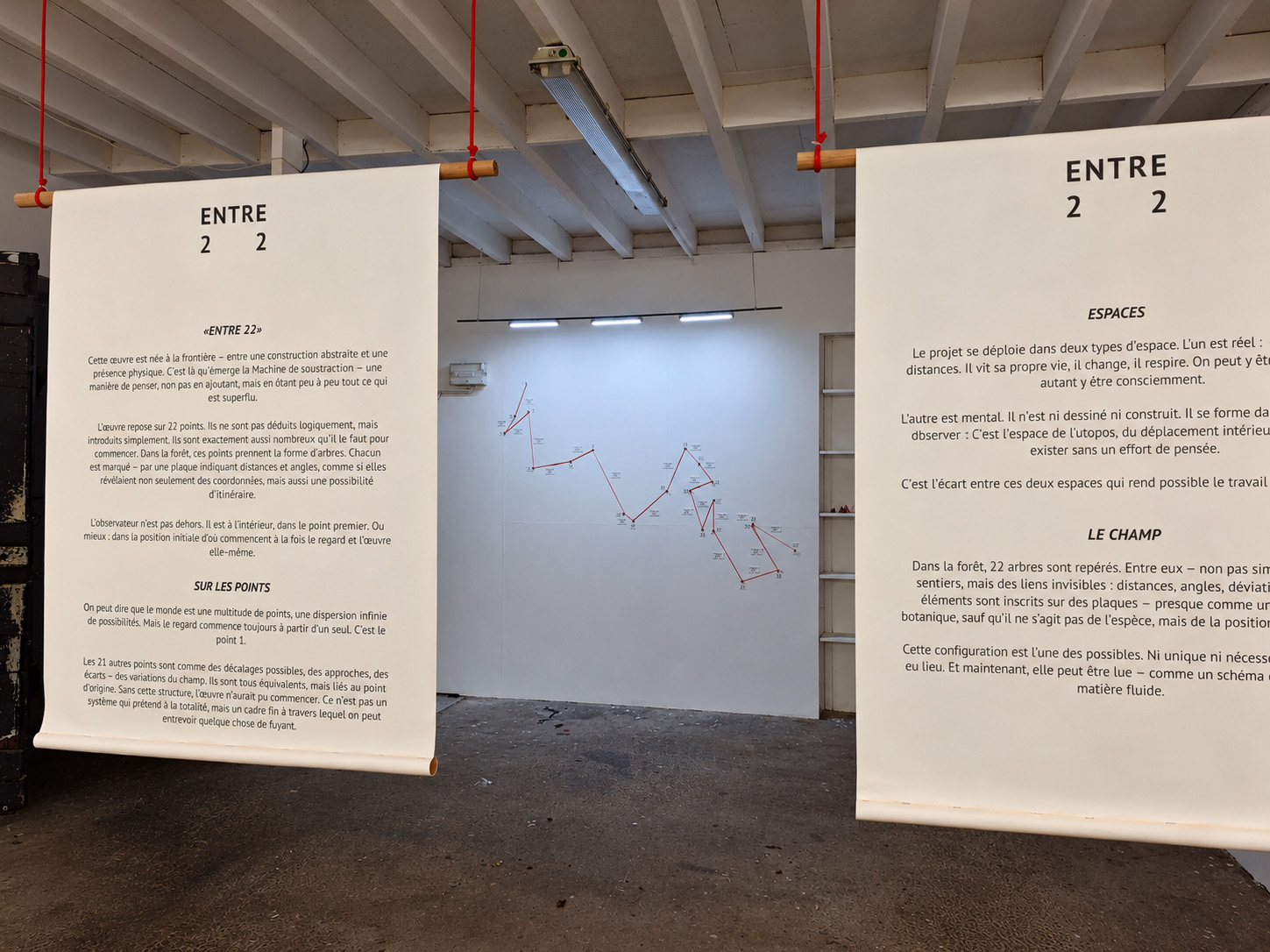
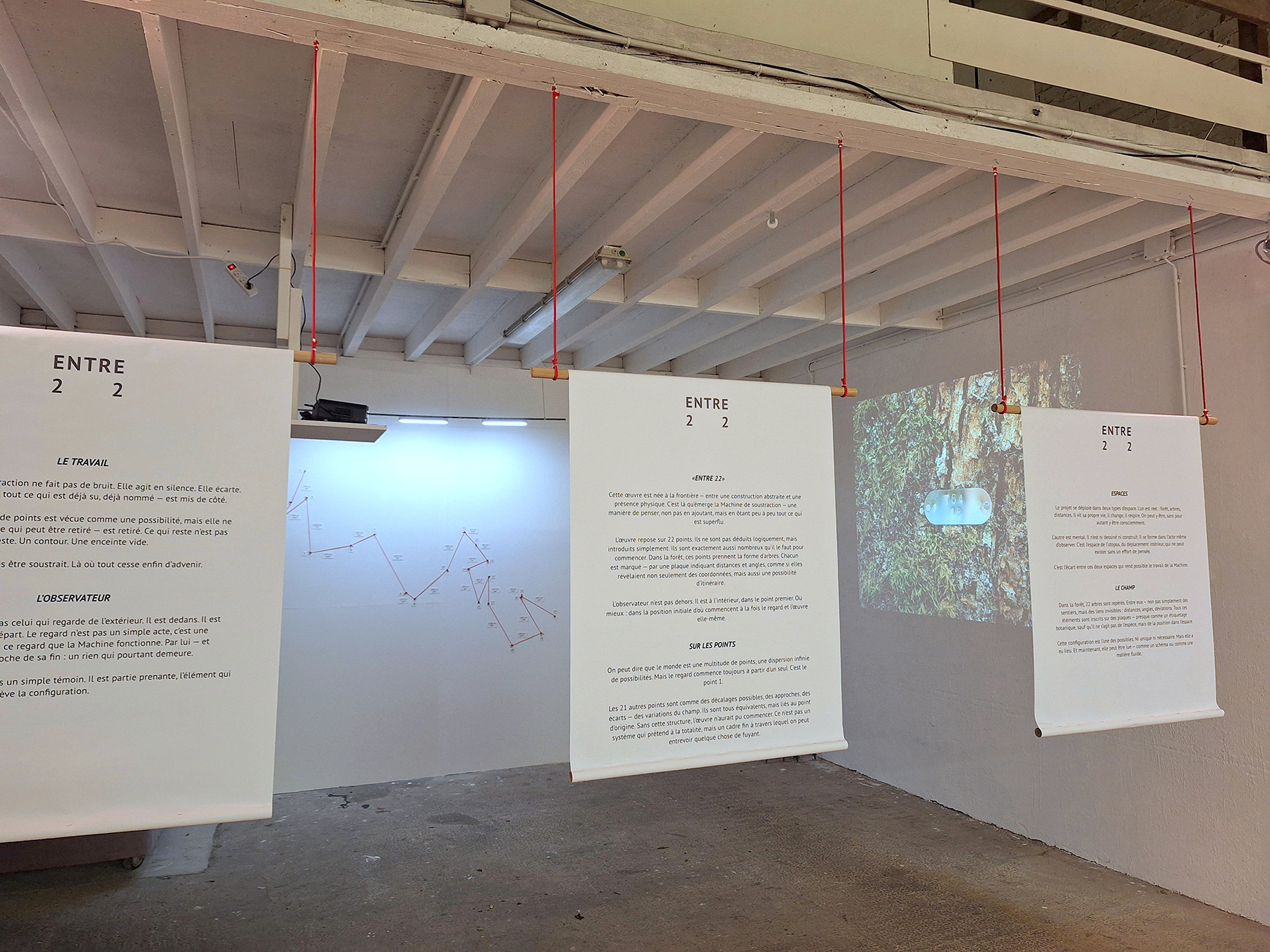
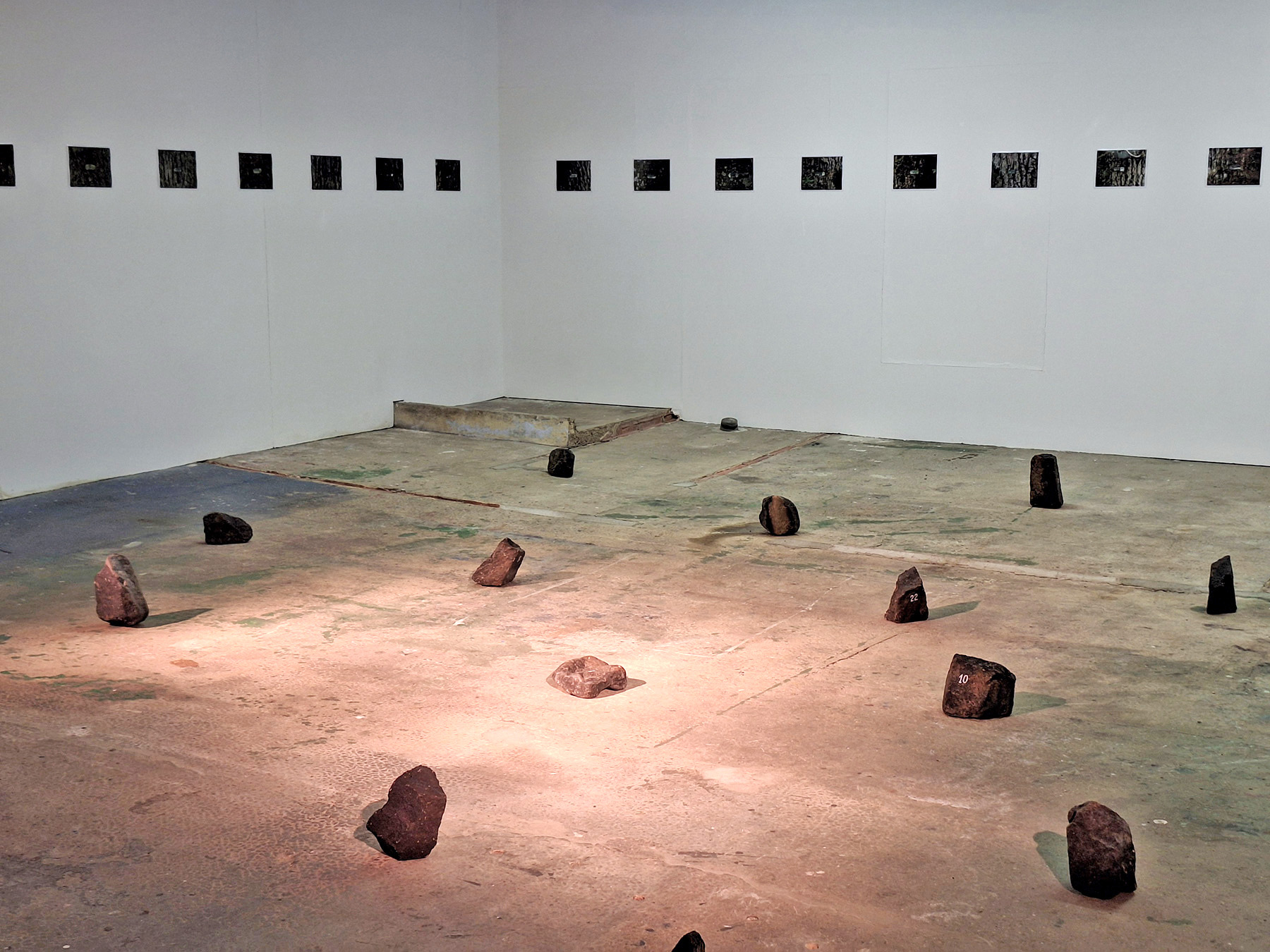
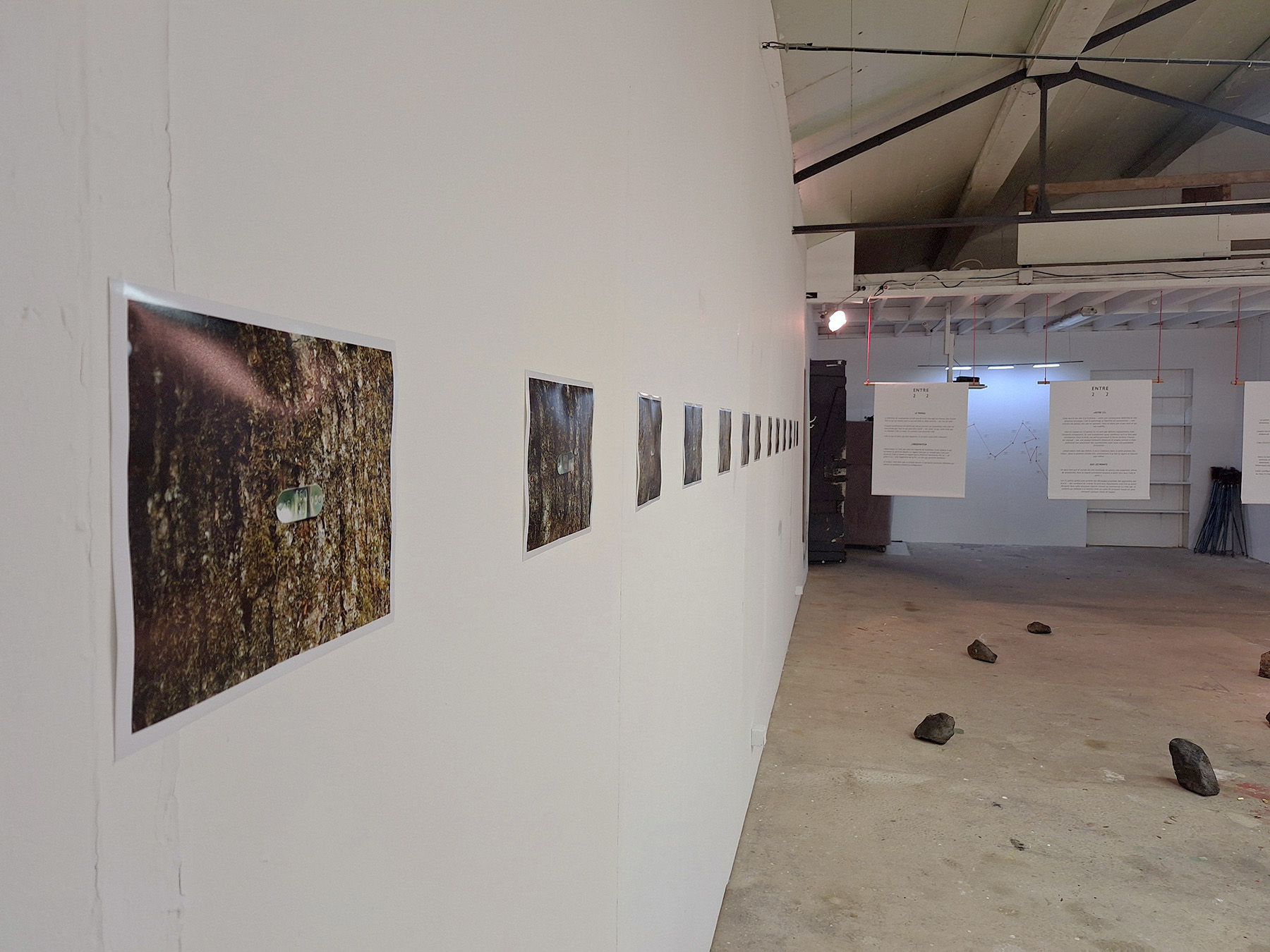
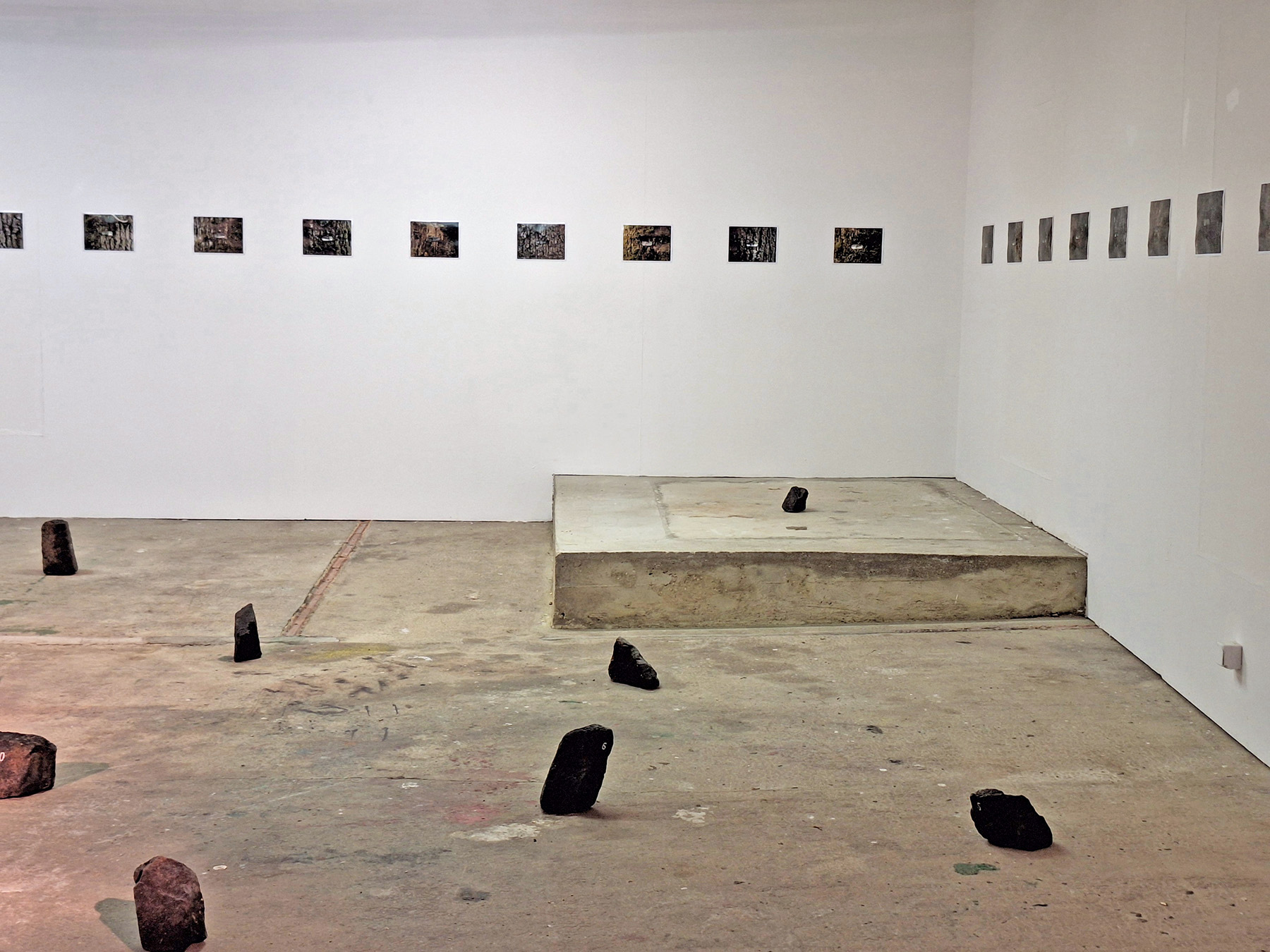
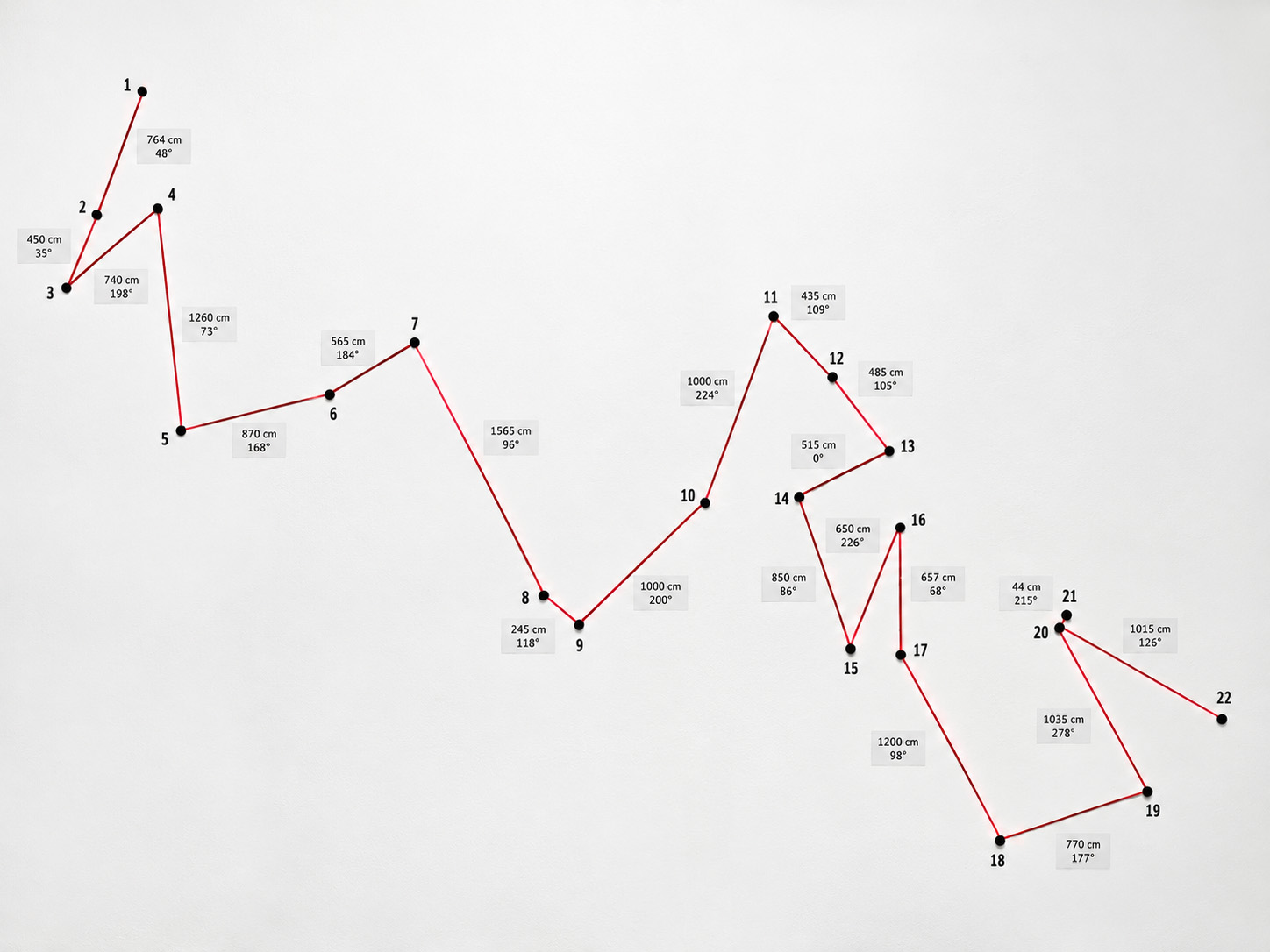
Diagram of 22 trees, with measured distances and angles.